Introduction
The modern city can be a hostile place for wildlife. Consider the humble—or proud—amphibian as a case in point. Many frogs, salamanders and newts maintain a biphasic life cycle, requiring both free water for their eggs and larvae to develop (the aquatic phase) and suitable conditions on land in which to thrive as juveniles and adults (the terrestrial phase). Sometimes, the aquatic and terrestrial habitats of a species are adjacent, but sometimes adults must move a substantial distance across the landscape to a breeding site, or juveniles will need to disperse away from their natal aquatic habitat following metamorphosis. Thus, to support amphibians in urban environments, we need to protect or reinstate both their aquatic and terrestrial habitats and their ability to move safely between the two. It may sound simple, but achieving this combination of three elements can be difficult in cities where streams, ponds and other wetlands are often destroyed or polluted, where terrestrial habitat elements such as understorey vegetation, leaf litter, rock piles and woody debris that provide moisture and shelter for small animals with permeable skins are removed in the name of safety or neatness, and where the spaces between remaining wildlife habitats contain many barriers to movement. It is far easier to be a bird or a bat or a volant insect able to fly above the myriad urban fences, roads and fast-moving vehicles.
Amphibians are the most threatened group of vertebrates on the planet, with 3,422 species or 42.5% of those assessed to date by the International Union for the Conservation of Nature (IUCN) classified as extinct, critically endangered, endangered, vulnerable to extinction or near-threatened Urbanisation—understood not as a single process, but as a combination of many processes that include the removal of native vegetation, the construction of buildings and roads, the destruction or modification of wetlands and the pollution of air, water and soil—plays a major role in pushing amphibians closer to extinction.
Since 1850, 90% of Swiss wetlands have been drained, or wiped out by urban or agricultural development.
Two of these processes are captured in the IUCN’s formal list of threats: 1) residential and commercial development; and 2) pollution. Of the 3,422 amphibian species mentioned above, 40% are threatened by residential and commercial development and 28% by pollution (noting that these categories are not mutually exclusive, as some species are threatened by both processes).
The conceptualisation of cities as human places has dominated the history of urban planning and urban engineering. Human concerns have been centred, and the requirements of other species have been overlooked. This is now beginning to change, with ideas of cities as more-than-human places gaining momentum. However, much damage remains to be undone, and new damage continues to occur as the global human population embraces urban living more than ever before. While the projected growth of the world’s urban population in the coming decades will be concentrated in Asia and Africa, urban development is continuing apace in countries such as Australia, New Zealand and the USA, where houses are large and urban sprawl is the norm. In all these regions, space for wetlands and the wildlife they support in cities will be at a premium.
How can humans protect, make or re-make urban places as amphibious spaces?
Embracing the amphibious urban means valuing habitats for amphibious wildlife as well as also valuing water and wetlands in cities. It means embracing ambiguity and the in-between, allowing spaces that are sometimes wet and sometimes dry, and accepting places that are messy and changeable and resistant to easy classification. Here are ways humans can act to protect existing amphibious spaces in cities, or to restore lost or create new amphibious elements of the urban landscape.
1. Respect the course of streams, from the headwaters down
The natural course of a stream is determined by geomorphology – the shape of the land and the way it descends from the high point at the top of a catchment or watershed down to the place where the stream joins with a larger stream, or a lake, or the sea. The uppermost reaches of a stream do not always contain water, especially in drier climates. A common engineering practice in cities has been to bury these first-order or headwater streams, redirecting their water to flow through underground pipes. The open stream and its riparian corridor – plus all the wildlife they support – are destroyed and built over, only to be remembered when heavy rainfall events lead to flows that that exceed pipe capacity, resulting in urban flooding.
For example, a famous flood of Elizabeth Street in Melbourne, Australia. In 1882, a stream known as Williams Creek was engineered to flow through giant drains beneath the street on its way to the Birrarung (Yarra River), to address regular flooding events that had occurred since the establishment of the colonial city in the 1830s. However, the drains could not hold all the water that flowed during a summer storm in February 1972, which flooded the street to a depth of 1.5 metres. Shops were inundated, cars were washed away, and commuters were stranded as public transport came to a halt.
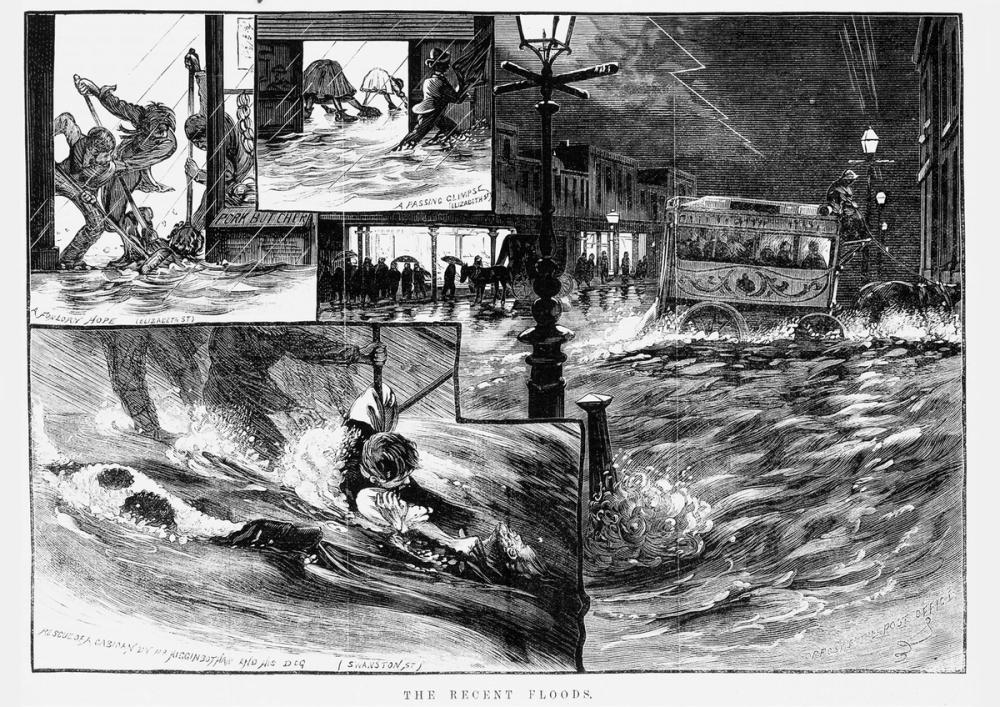
A wood engraving from November 1881, showing scenes of the flooding of Elisabeth Street in Melbourne, Australia. © State Library Victoria.
Like Williams Creek, urban streams that are buried and constrained into pipes are still there and occasionally make their presence felt; they cannot be entirely engineered away. Preserving first-order streams as open green channels that sometimes carry flowing water would allow rainwater to drain naturally into the soil, reducing the burden on stormwater systems and creating a network of green space with benefits for humans and the more-than-human alike.
The straightening and concreting of streams were two other urban engineering practices that were popular during the 19th and 20th centuries: designed to neaten and corral, they confined water flows to well-defined channels in an attempt to minimise flooding of urban areas after significant rain. As a consequence, swamps, soaks, oxbows and other stream-adjacent, sometimes-wet habitats were destroyed and built over or transformed into formal ponds in manicured parklands. There has been recent enthusiasm for renaturalising urban streams as a nature-based solution to problems such as climate change, flooding, urban heat, habitat loss and the biodiversity crisis. The process involves removing concrete channels and allowing streams to take a slower and more meandering path, often with associated works to revegetate the stream banks and create pleasant spaces for humans to enjoy nature while providing other environmental benefits, including cooling, carbon sequestration, ecosystem restoration and improved habitat connectivity for aquatic wildlife.
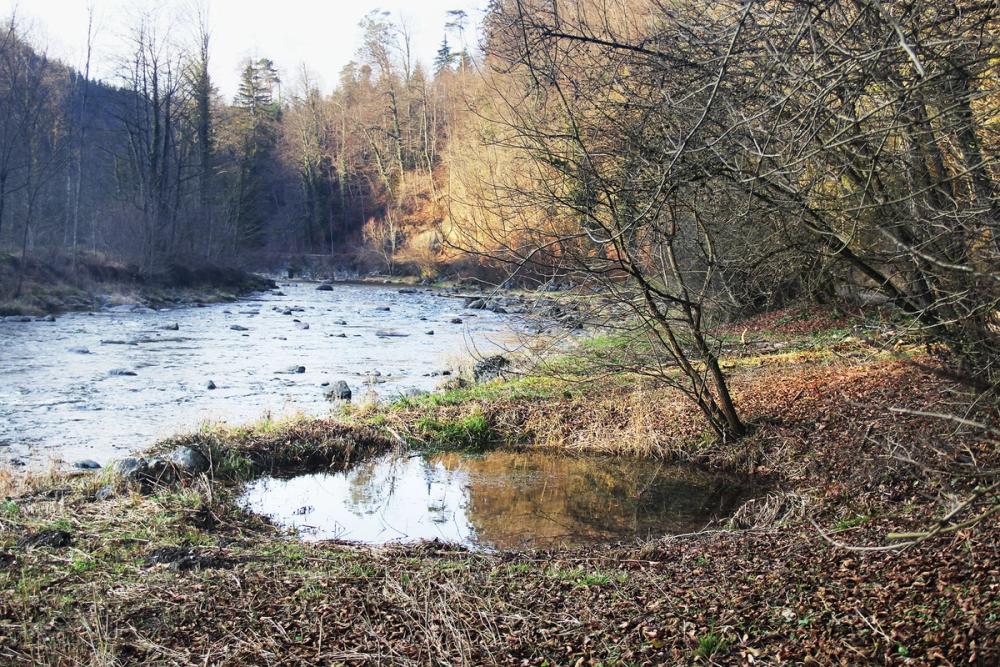
Within the last 100 years, many Swiss rivers and creeks were straightened and regulated for flood protection and land reclamation. Today, some restoration efforts are underway. For instance, at the Sihl river in the canton of Zurich, where most of the existing riverbank structures will or already have be removed. Islands, large boulders, and more branches will make the river more diverse and dynamic to support river health and biodiversity. The image shows a recently created part of a pond next to the Sihl river, providing new spawning grounds for the midwife toad. © Verein Hot Spots.
The EU Nature Restoration Regulation 2024, a key element of the EU Biodiversity Strategy, sets a series of targets for nature restoration. These include the target of restoring at least 25,000 km of rivers to a free-flowing state by 2030. However, it is very expensive to re-naturalise a stream, and its former complexity may never be fully restored again: it is far better to preserve streams and their riparian corridors as the natural assets they are and provide a buffer zone on either side where urban development is not permitted. Such riparian areas provide a network of open spaces through the urban landscape, offering many benefits, including local cooling, habitat for wildlife and opportunities for urban humans to connect with nature. Only a few species of amphibians are adapted to breed in fast-flowing streams. For the remainder, any management actions that slow stream flows and restore non-flowing, riparian wetlands will improve opportunities for successful reproduction and for conserving amphibian populations in urban areas.
2. Retain or (re)construct unpolluted lentic wetlands
Wetlands can be divided into two groups – those that flow (lotic) and those that do not (lentic). Hence, lentic wetlands include pools, ponds, dams and lakes. As with the first-order streams discussed above, pools, swamps, soaks and ponds that do not contain permanent water have been frequent casualties of urban development often drained, filled in, built on, and paved over. Their ephemerality is both their downfall and a significant asset for many freshwater species that rely on these types of water bodies. In the case of amphibians, certain species are adapted to breed in ephemeral ponds, which often contain fewer predators such as fish and insects; others are adapted to breed in permanent ponds and co-exist with their predators. Some frog species have larval lifespans as short as two to three weeks, while others require ponds to contain water for several months. When ephemeral ponds are preferentially destroyed in cities, what remains is a higher proportion of permanent ponds and fewer aquatic spaces suitable for ephemeral-adapted species.
Many human-constructed urban ponds are highly polluted. Approaches to urban water management such as water sensitive urban design (WSUD; also known as low impact development (LID), sustainable urban drainage systems (SUDS) or integrated urban water management (IUWM) have focused much attention on protecting streams from the damage caused by excess stormwater running quickly off the vast expanses of hard, paved surfaces in urban catchments. These flashy, often-polluted flows are a principal cause of what is known as the urban stream syndrome, which presents itself in high flows after rain, the simplification and channelisation of streams, scoured stream banks, and low base flows between rainfall events.
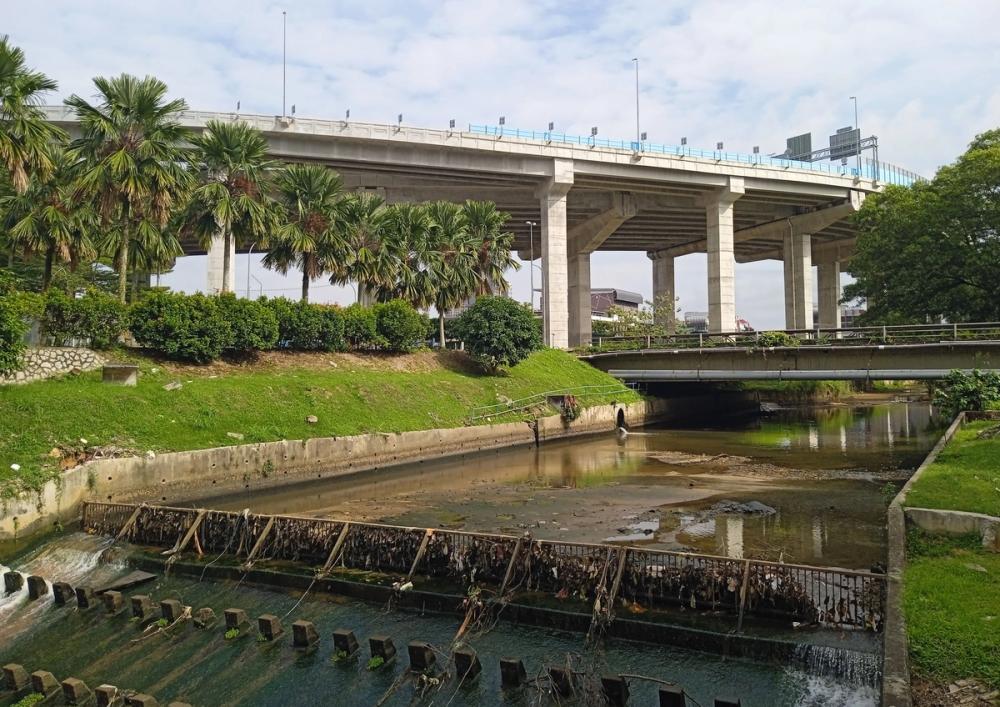
Urban rivers like the Sungai Tabul—one of the urban rivers in Selangor, Malaysia—are frequently affected by pollutants and stream bank alteration. © Wikimedia, Wiki Farazi.
In response, new urban ponds are constructed to intercept stormwater runoff and filter out pollutants using dense plantings that slow flows and trap particles before the water reaches a receiving stream (noting here that I refer to stormwater that is not comingled with human wastewater from sewers, as is the case in some cities). These ponds perform this function very efficiently, but as a consequence, their water and sediments often contain a toxic cocktail of heavy metals, road salt, herbicides, insecticides and other organic pollutants such as PFAS. Depending on concentrations, these types of chemical pollutants are lethal to many pond-dwelling animals. But they also have a range of sub-lethal effects that can compromise the biological fitness of amphibians, fish and aquatic insects (i.e., the probability that an individual organism will survive and successfully reproduce).
Amphibians have permeable skin through which they exchange gases and absorb moisture from their environment: this leaves them more vulnerable to chemical pollutants in water, sediments and soil than other groups of animals. Furthermore, the physiological complexity of transforming from egg to larva to adult makes amphibians particularly susceptible to chemical pollutants that disrupt the functioning of the Hypothalamic-Pituitary-Thyroid (HPT) axis, which plays a key role in development and metamorphosis. Hence, amphibians exposed to chemical pollutants show increased levels of abnormal behaviour as larvae and increased rates of deformities as adults (Khan & Law, 2005; Sievers et al., 2019), in addition to reduced survival rates.
An additional approach to building ponds that receive and treat stormwater runoff is to construct urban ponds specifically as habitat for amphibians and other wildlife, ensuring they receive clean instead of polluted water. These ponds do not need to be as large as those designed to intercept and filter stormwater, and are therefore easier and cheaper to construct. Adding ponds with a range of depths, shapes and substrates creates a varied ‘pondscape’ of ephemeral and permanent ponds that caters for the breeding requirements of a diverse range of amphibians and other taxa. This strategy has proven effective in the Canton of Aargau in northern Switzerland, where the construction of hundreds of new ponds as breeding habitat for amphibians improved the population trajectories of 10 out of 12 pond-breeding species between 1999 and 2019.
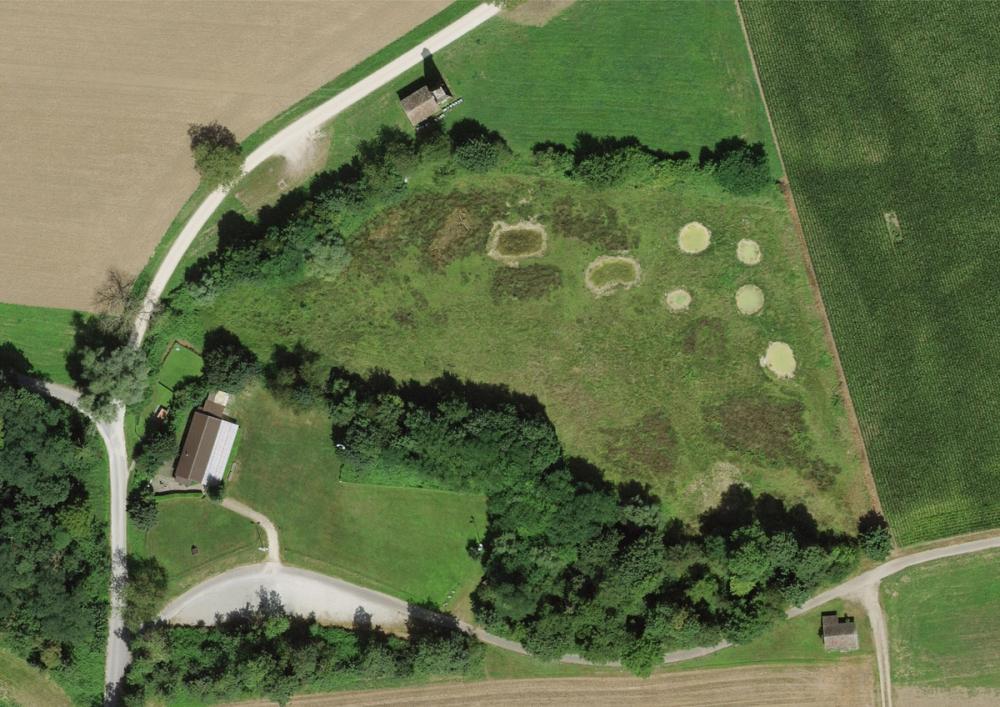
A satellite image showing some ponds in Rheintal in the canton of Aargau. Within the last 20 years, approximately 400 new ponds were installed in various regions of canton to support amphibian life. © Swisstopo.
A similar approach is underway in the Canton of Geneva, where the ‘101 Étangs’ (101 Ponds) program was completed in 2021; the follow-up program ‘222 Étangs’ is aiming to construct a total of 222 new ponds by 2027, in collaboration with individuals, municipalities, companies and communities across the Geneva Basin. These ponds will supplement Geneva’s existing ponds to help build a pondscape that will meet the habitat requirements of pond-breeding frogs and newts in the Canton. Ensuring suitable terrestrial habitat for pond-breeding amphibians, and a landscape that allows for safe and effective movement between breeding and non-breeding habitats and among different ponds will also be necessary for the success of a constructed urban pondscape as an amphibian-conservation strategy.
3. Respect the water, Part I: Flows and their power
Anyone who has witnessed a flood can attest to the power of flowing water. During floods the amphibious urban is at its most destructive, and water is likely to be viewed as an enemy rather than as an ally or integral part of the urban environment. Many cities around the world are built near the ocean or on floodplains – which are, by definition, at least occasionally inundated with flood waters from a stream or river. With climate change, sea levels are rising and the intensity of storms is increasing, thereby increasing the risk of more frequent and severe urban floods. Floods in cities can result from coastal flooding associated with heavy rainfall and storm surge (when a low-pressure system such as a cyclone or hurricane leads to a temporary increase in sea level), from riverine flooding, from overwhelmed stormwater systems, or a combination of these. The incursion of seawater into coastal freshwater bodies (e.g., due to a storm-surge event or a long-term sea-level rise) increases their salinity, and depending on the volume and extent of the incursion, may reduce their suitability as habitat for amphibians. Most frog and salamander species cannot tolerate high levels of salinity as larvae or adults. Thus, the expectation of higher sea levels around the world in the coming decades will reduce the suitable habitat for amphibians living in near-coastal habitats and low-lying areas further inland.
The heightened reality of urban flooding requires a bold urban planning response. This may mean that some parts of a city where flooding used to be sufficiently minor and infrequent to be manageable become places that can no longer support residential or commercial buildings. It may mean that roads, housing and other infrastructure adjacent to the coast must be abandoned, and changed zoning applied to ensure that new structures are built in areas that are protected from storm surge and ongoing sea-level rise. It may mean returning to housing designs such as the classic ‘Queenslander’ from northern Australia, built on stilts to survive frequent floods.
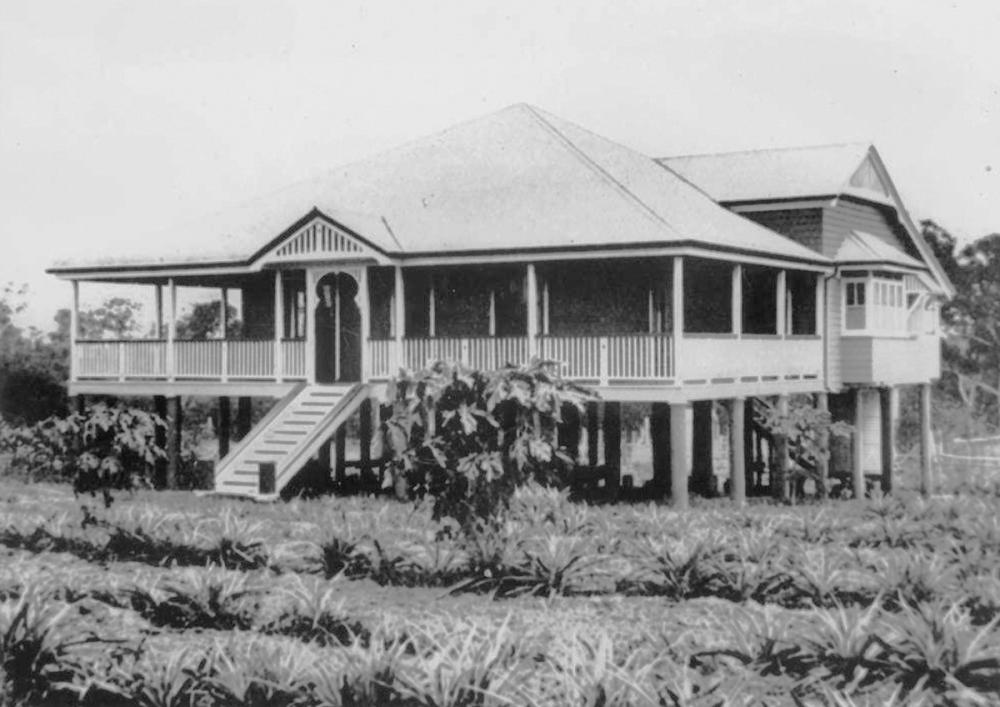
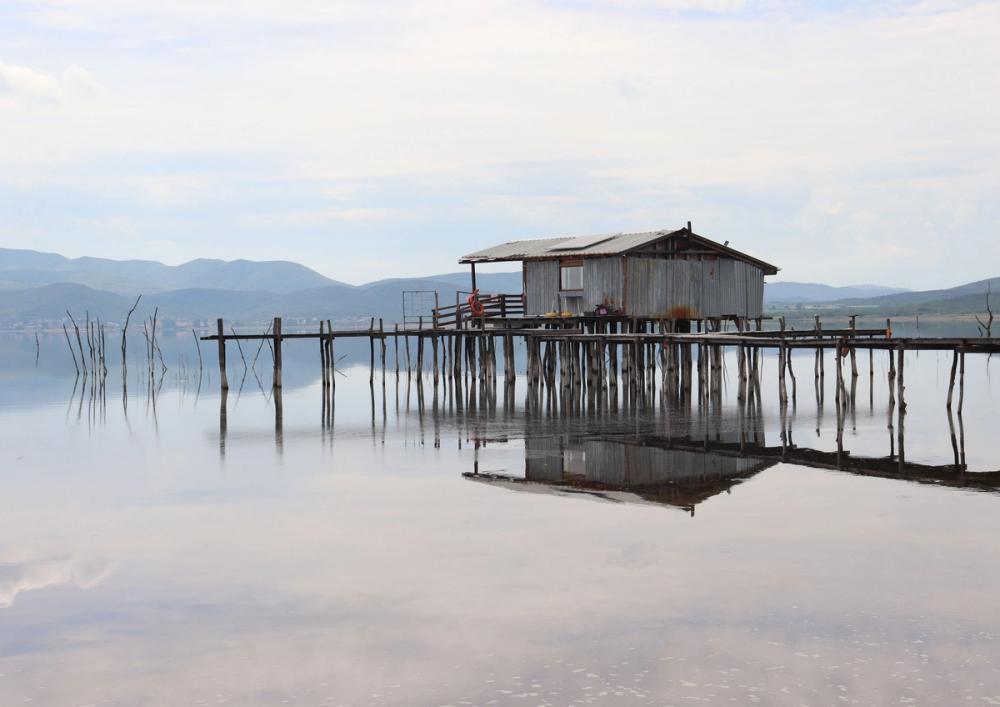
FIG. 05 – 06
Pile dwellings are structures that are built on sticks. In the past, they were common building strategies to live with seasonal floodwaters, like shown here, in Wynnum Australia and at Doiran Lake, Macedonia. © State Library Queensland; Wikimedia, Kiril Simeonovski
Water-sensitive urban design and the related concept of ‘sponge cities’ must come to the fore, working to reduce urban runoff during rainfall events and to channel excess stormwater to holding basins, ponds, above- and below-ground tanks and other structures. The flood-protection value of natural systems such as permeable catchments, natural streams, riparian vegetation, mangroves and coastal dunes must be better recognized by the professions that plan and manage our cities. Furthermore, these assets must be better protected and/or restored where they have been destroyed by urbanisation.
4. Respect the water, Part II: Protect wetlands from sensory pollution
Earlier, I discussed chemical pollution in urban wetlands as a significant problem for amphibians and other freshwater wildlife, via its lethal or sub-lethal effects on biological fitness. A chemical pollutant can also act as a sensory pollutant, which is defined as a substance or phenomenon that affects the sensory perception of animals, plants or fungi. Many chemical pollutants interfere with an animal’s sense of smell or taste, thereby disrupting chemical communication within and between species. For example, in an experimental study, low concentrations of the heavy metal copper and the insecticide imidacloprid changed the behaviour of tadpoles by reducing their sensitivity to the scent of predators. If a tadpole cannot smell a nearby predator, it will not move to avoid it, leading to an increased risk of predation. Artificial light at night (ALAN; also known as light pollution) disrupts natural cycles of light and dark, affects the transmission of visual signals, and has complex impacts on the physiology, behaviour, survival and reproduction of plants and animals. In amphibians, known effects of ALAN exposure include changes to foraging behaviour as larvae and as adults, changes to reproductive behaviour as adults, and disruption of physiological processes including hormonal regulation and levels of oxidative stress.
Human-generated noise from road traffic, air traffic, industry and construction interferes with acoustic communication in many groups of animals, including frogs, birds, mammals, fish and soniferous insects. Anthropogenic noise can also cause behavioural changes, increased levels of physiological stress, and reduced breeding success. Most studies on the biotic effects of anthropogenic noise have focused on birds (in the terrestrial realm) and mammals such as dolphins and whales (in the marine realm), with a relatively small body of work focusing on amphibians and freshwater environments more generally. Noise from road and air traffic is known to interfere with acoustic communication in frogs, reducing the distance over which a male’s call can be detected by females. Frogs show a strong relationship between body size and call frequency (pitch): larger frogs have lower-pitched calls that are expected to experience greater acoustic interference in urban noise than the higher-pitched calls of smaller frogs, because the former overlaps more with the dominant frequency bands of the background noise. This could, in theory, lead to selection pressure for smaller males in urban frog populations, as their calls would be easier to detect than those of larger frogs. However, the impacts of urban noise on individual fitness, breeding success, evolution and population-level persistence of frogs remain poorly understood.
Noise from road and air traffic is known to interfere with acoustic communication in frogs, reducing the distance over a which a male’s call can be detected by females.
In cities, many sensory pollutants can occur together in space and time – for example, at an urban wetland located near a busy, noisy road, which receives stormwater runoff polluted with a range of chemicals, and is lit all night by streetlamps (Parris, 2019). However, little is known about how the cocktail of these various sensory pollutants may work together to affect different sensory modes in more-than-human species. A conceptually simple solution to this problem would be to protect urban wetlands and their inhabitants from sensory pollution. But given the scale of this task and the centrality of stormwater ponds to many urban water management approaches, a more realistic approach is to separate wetlands designed to support wildlife from those designed to intercept pollutants: we need to abandon the notion that a single pond can perform both tasks effectively. Ponds that contain high levels of pollutants could be made less attractive to wildlife through various methods, depending on the habitat preferences of the species in question, or fenced off to prevent wildlife access. Combined with the creation of ponds specifically for wildlife (as discussed above), this would help to reduce the exposure of amphibians, fish and freshwater macroinvertebrates to chemical sensory pollutants in cities. Ideally, ponds for wildlife would also be situated in darker, quieter areas of a city that receive minimal artificial light at night and minimal anthropogenic noise. To assist with the latter requirement, construction of sound barriers to protect more-than-human urban dwellers from road traffic noise would be a good step forward. At the time of writing, only humans receive legislated protection from excessive road noise in many parts of the world. Air traffic noise is harder to mitigate, so areas located away from the flight paths of major airports would be preferable sites for the construction of ponds for wildlife.
Multi-species justice in the city, or: Reimagining planning and design for an urban-amphibious future
To whom do we afford justice? Historically, the idea of justice in Western thought has been linked to personhood, with the definition of a person originally prescribed to exclude the majority of human beings, including women, Indigenous people, and anybody who was not a white, property-owning, cisgender man. Personhood – and therefore justice – certainly did not extend to members of other species, or to entities such as rivers, mountains or ecosystems (in contrast to the concept of personhood in many Indigenous knowledge systems). The philosophy of multi-species justice frames the more-than-human in cities as morally considerable and therefore deserving of justice. Urban planning, policy and governance need to move beyond their historical anthropocentrism if we are to create amphibious cities that are liveable for all: a place where all species and the ecosystems that support them can thrive.
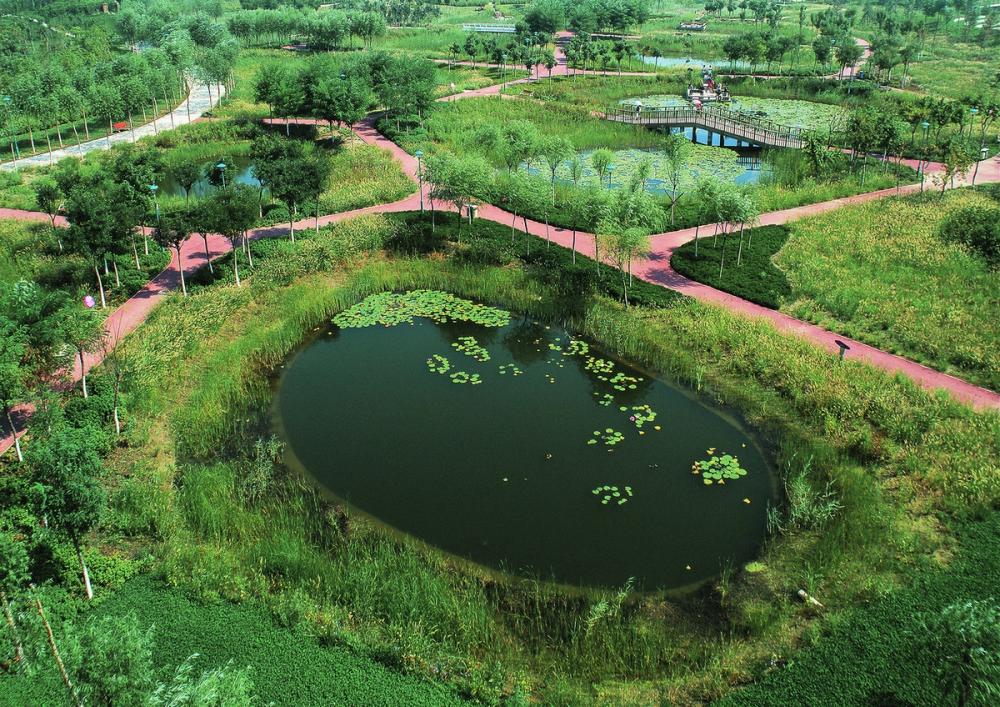
Tianjin Qiaoyuan Park in Tianjin City, China, is one among many new urban landscape designs that are based on the sponge city concept. Sponge cities aim to reduce the risk of floods, replenish groundwater supplies, and enhance biodiversity by absorbing, storing, and reusing rainwater. © Wikimedia, Mydogistiaotiaohu.
New approaches to urban planning and design are working in that direction. They offer a way for us to embrace an urban-amphibious future, both in theory and in practice. These approaches all share the recognition that cities provide not only habitat for people but also habitat for many other living entities. For example, biodiversity sensitive urban design (BSUD) is a framework for urban planning that explicitly considers the needs of the more-than-human in cities, and seeks to acheive biodiversity gains at development sites, countering the narrative that development must always have a negative impact on nature. There is also a growing body of evidence that wetlands in cities are beneficial to humans, through the provision of ecosystem services such as atmospheric cooling, flood mitigation, carbon storage, nutrient cycling, opportunities for recreation and more. Further, the opportunity for connection to nature in urban environments is known to improve physical and mental health, increase creativity, and improve the quality of life for people living in cities. Embracing wetlands and amphibious wildlife while aiming to make conceptual and physical space in cities for all the species with which we share them, will be key to embracing a new era of the amphibious urban.